
Why Transitions Are So Hard for Kids: The Nervous System Connection Most Parents Miss
If getting your child out the door every morning feels like negotiating a peace treaty, you're not alone.
Maybe it's turning off the tablet for dinner. Leaving the playground. Walking into school. Getting ready for bed. Or spending 30 minutes trying to convince your child to put on a pair of socks.
If you've tried reward charts, visual schedules, countdowns, deep breathing, and every parenting strategy you can find, only to feel like nothing really sticks, I want you to know something:
This is probably not a parenting problem.
At E320 Chiropractic, we see many families who feel like they're constantly walking on eggshells around transitions. The good news is that once you understand what's happening inside your child's nervous system, those daily battles begin to make a lot more sense.
Why Transitions Feel So Big to Some Kids
Every transition asks the brain to do something surprisingly complex.
Your child has to stop what they're doing, let go of what currently has their attention, organize what's coming next, and shift their body and brain into a completely different activity.
That process is called set shifting, and it's part of the brain's executive functioning system.
For children with ADHD, anxiety, sensory processing challenges, or chronic nervous system stress, set shifting is much harder. Their brains are already working overtime simply to process everyday life, so even small changes can feel overwhelming.
To you, it's just time to leave the park.
To your child's nervous system, it can feel like the entire world just changed without warning.
When the Nervous System Gets Stuck
One of the easiest ways we explain this to parents is by using the gas pedal and brake pedal analogy.
The sympathetic nervous system is the gas pedal. It prepares the body to react, move, protect itself, and stay alert.
The parasympathetic nervous system is the brake pedal. It allows the body to calm down, regulate emotions, digest, sleep, and adapt to change.
Healthy nervous systems move smoothly between both.
But many children today spend far too much time with the gas pedal pressed down. Their nervous system stays on high alert, making even ordinary transitions feel stressful.
This pattern is known as dysautonomia, or nervous system dysregulation.
When a child is living in this state, asking them to simply "calm down" is a little like asking someone to stop sneezing during allergy season. Their body is responding exactly the way their nervous system has been programmed to respond.
Why ADHD, Anxiety, and Sensory Challenges Often Look Similar
Parents often wonder why children with very different diagnoses seem to struggle with many of the same things.
The reason is that the underlying nervous system patterns are often remarkably similar.
A child with ADHD may struggle to disengage from an activity because their brain has difficulty shifting attention.
A child with anxiety may become overwhelmed by uncertainty before the transition even begins.
A child with sensory processing challenges may already be working incredibly hard just to process lights, sounds, textures, movement, and other sensory input throughout the day.
Different diagnoses.
Very similar nervous system challenges.
That is one reason behavior charts, consequences, and reward systems sometimes help only temporarily. They work on behavior without addressing the nervous system that's driving it.
How the Nervous System Gets Stuck
Children are not born unable to adapt.
More often, we see what we call the Perfect Storm—a series of stressors that gradually overwhelm the developing nervous system.
That story may begin during pregnancy with chronic maternal stress. It can continue through birth, especially when interventions, prolonged labor, or birth trauma place additional stress on a baby's developing nervous system.
As children grow, layers continue to build. Ear infections, antibiotics, digestive issues, poor sleep, sensory overload, injuries, environmental stressors, and the demands of modern life all ask more and more of the nervous system.
Over time, some children simply lose the ability to adapt as efficiently.
Their nervous system stays prepared for danger even when they're perfectly safe.
What You Can Do at Home
The good news is that there are several practical ways to support your child's nervous system throughout the day.
Giving advance warnings before transitions allows the brain time to prepare instead of reacting suddenly. Predictable routines reduce the amount of processing required during busy parts of the day. Regular movement helps discharge built-up stress and provides healthy sensory input. Prioritizing sleep gives the nervous system the opportunity to recover and recharge.
Perhaps most importantly, remember that children co-regulate with the adults around them. Your nervous system becomes part of your child's environment. When you are able to remain calm and regulated, your child has a much better chance of finding that regulation too.
These strategies can make a meaningful difference, and we encourage every family to use them.
When Home Strategies Aren't Enough
Sometimes families do everything right and still struggle.
If you've consistently used visual schedules, routines, countdowns, movement breaks, and calming techniques, yet transitions continue to feel like the hardest part of every day, it may be time to look deeper.
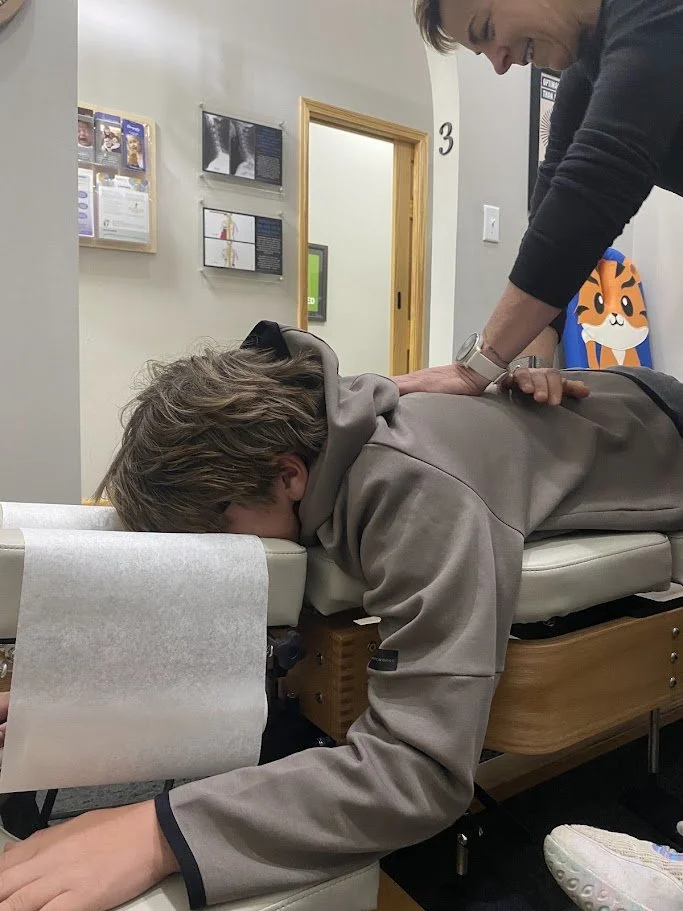
At E320 Chiropractic, we use INSiGHT Scans to evaluate how your child's nervous system is functioning and adapting to stress. These scans help us objectively measure patterns of nervous system dysregulation, adaptability, and stress that cannot be seen through observation alone.
From there, neurologically-focused chiropractic care is designed to support healthier nervous system communication and help the body shift out of chronic fight-or-flight patterns.
As the nervous system becomes more adaptable, many parents notice that transitions become easier—not because the child suddenly learned a new strategy, but because their nervous system has more capacity to handle change.
You Don't Need More Parenting Advice. You Need Better Answers.
If every transition feels like a battle, please know this:
Your child is not giving you a hard time.
More often than not, they're having a hard time.
And if you've been carrying the weight of wondering whether you're doing enough, I hope you can let some of that go.
At E320 Chiropractic, we believe children deserve more than behavior management alone. They deserve a nervous system that can adapt, regulate, and thrive.
Because when we support the foundation first, everything built on top of it has a better chance to flourish.