
Birth Trauma in Babies: Understanding the Nervous System Connection
Birth trauma does not always look like a dramatic emergency, an extended NICU stay, or a delivery everyone immediately recognizes as traumatic. Sometimes it is a very long labor. Sometimes it is an incredibly fast one. Sometimes it involves induction, a vacuum or forceps, an unplanned C-section, fetal distress, or a birth that simply did not unfold the way a family expected.
And sometimes everything is documented as “normal,” yet a parent still walks away feeling like the experience mattered.
Months or years later, that same family may be trying to make sense of feeding struggles, reflux, difficulty sleeping, sensory sensitivity, delayed milestones, big emotions, or a child who seems to live in a constant state of high alert. Those concerns can have many causes, and a difficult birth does not automatically explain them. But at E320 Chiropractic, we believe the birth story is worth understanding because it is one of the earliest major experiences a developing nervous system goes through.
We are not looking for something to blame. We are looking for patterns that may help us better understand how a child’s nervous system learned to adapt from the very beginning.
Birth Trauma and Birth Stress Are Bigger Than an Injury
When people hear the words “birth trauma,” they often picture a documented physical injury. That absolutely can happen, but birth trauma can also describe the emotional experience of birth for the mother, particularly when she felt frightened, powerless, unheard, or unsafe.
For the baby, we tend to talk more about birth stress. Labor and delivery are naturally intense physiological experiences, and the nervous system is designed to adapt to them. But some births place considerably more demand on that system than others.
A prolonged labor, precipitous delivery, fetal distress, unusual positioning, or assisted delivery may all create a very different experience for a newborn than a straightforward delivery. Medical interventions such as induction, vacuum or forceps assistance, and Cesarean birth can also be lifesaving and completely appropriate when needed. Recognizing that a birth involved additional stress is not the same thing as saying the intervention was wrong.
For us, the important question is what happened next. How did that baby's nervous system adapt after the birth was over?
Why the Birth Story Matters to the Developing Nervous System
A newborn’s nervous system is still developing rapidly. It is constantly receiving sensory information and learning how to respond to the world outside the womb.
Ideally, after the enormous physiological demands of birth, the nervous system begins settling into rhythms of feeding, sleeping, digestion, movement, connection, and recovery. But some babies seem to have a much harder time finding that regulated state.
Parents may notice that their baby is difficult to settle, arches frequently, struggles with feeding, seems uncomfortable after eating, sleeps only for short periods, startles easily, dislikes certain positions, or needs constant movement in order to calm down.
None of those signs automatically means birth trauma is the cause. They do, however, give us information about how the nervous system is adapting.
That is why the birth history is such an important part of the conversation at E320 Chiropractic. We want to understand what the nervous system experienced before, during, and after birth rather than looking only at the symptom that brought the family through our doors.
The Perfect Storm Can Begin Before Birth
We often use the term Perfect Storm to describe the accumulation of stressors that can affect a developing nervous system over time.
That story may begin during pregnancy with significant physical or emotional stress. Then labor and delivery add another major physiological demand. After birth, challenges with feeding, sleep, digestion, illness, medications, sensory input, or development may add additional layers.
The important word is accumulation.
We are not saying one stressful pregnancy, one induction, one C-section, or one difficult night created a child’s current challenges. Human nervous systems are far more complex than that.
Instead, we ask how much stress the nervous system has experienced, how effectively it has been able to adapt, and whether it has had enough opportunity to return toward regulation and recovery along the way.
Looking at the story this way helps families connect dots without turning the birth experience into something to blame.
Understanding Subluxation Through a Neurological Lens
At E320 Chiropractic, when we use the term subluxation, we are not simply talking about a bone being “out of place.”
We are looking at altered neurological input and patterns of stress that may affect communication between the brain and body. Movement, sensory input, proprioception, and information from muscles, joints, and connective tissues all contribute to the way the nervous system understands where the body is and how it should respond.
When those signals become disorganized, the nervous system may have to work harder to interpret what is happening and coordinate an appropriate response.
That additional neurological workload may be one piece of why some babies and children seem to have difficulty shifting out of a heightened stress response.
The goal is not to look at every symptom and blame it on subluxation. It is to understand whether the nervous system itself appears organized, adaptable, and capable of moving efficiently between activation and recovery.
The Autonomic Nervous System, Dysautonomia, and the Vagus Nerve
The autonomic nervous system regulates many of the functions the body handles without conscious thought, including heart rate, digestion, temperature regulation, breathing patterns, and aspects of sleep and recovery.
We often describe its sympathetic side as the gas pedal and its parasympathetic side as the brake. Both are important. The nervous system should be able to activate when necessary and then shift back toward rest and recovery when the demand has passed.
When that flexibility becomes disrupted, we may see patterns of nervous system dysregulation or dysautonomia.
The vagus nerve is an important part of this parasympathetic system and helps coordinate communication between the brain and many internal organs. That is one reason we pay attention to patterns involving feeding, digestion, sleep, settling, and regulation rather than viewing each concern as completely separate.
A baby who struggles to settle, a toddler with persistent digestive challenges, and an older child who becomes overwhelmed very easily may look very different on the surface. The nervous system gives us another lens through which to understand those patterns.
Birth Interventions Are Part of the History, Not Something to Blame
Families often ask whether induction, C-section, vacuum assistance, forceps, or other birth interventions could have affected their child.
The most accurate answer is that birth is complex, and no single intervention tells us how a child’s nervous system is functioning today.
Those interventions are sometimes medically necessary and lifesaving. We never want a mother to look back at the birth of her child and feel that she made the wrong decision because an intervention was needed.
What we do want is the full story.
Was labor unusually long or extremely fast? Was the baby in distress? Was assistance needed during delivery? Did feeding become difficult immediately afterward? Was the baby extremely tense, difficult to settle, or uncomfortable from the beginning?
When several of those pieces appear together, they may give us useful information about how much stress the developing nervous system was navigating.
What We Measure at E320 Chiropractic
Rather than assuming a difficult birth means the nervous system is dysregulated, we want objective information.
At E320 Chiropractic, we use Neurological INSiGHT Scans to evaluate patterns of nervous system function, regulation, and adaptability.
The NeuroThermal Scan helps us evaluate patterns associated with autonomic nervous system function. The NeuroSpinal EMG gives us information about neurological tension, energy expenditure, and organization. Heart Rate Variability, or HRV, can provide additional insight into autonomic adaptability and the relationship between sympathetic activation and parasympathetic recovery when age appropriate.
Together, these scans give us another way to understand how hard the nervous system may be working and how effectively it appears to be adapting.
They do not diagnose birth trauma, reflux, developmental delays, ADHD, sensory processing challenges, or other medical conditions. They help us evaluate nervous system function so we can better understand whether regulation and adaptability may be an important piece of the child’s bigger health picture.
Gentle Nervous System Support for Babies and Children
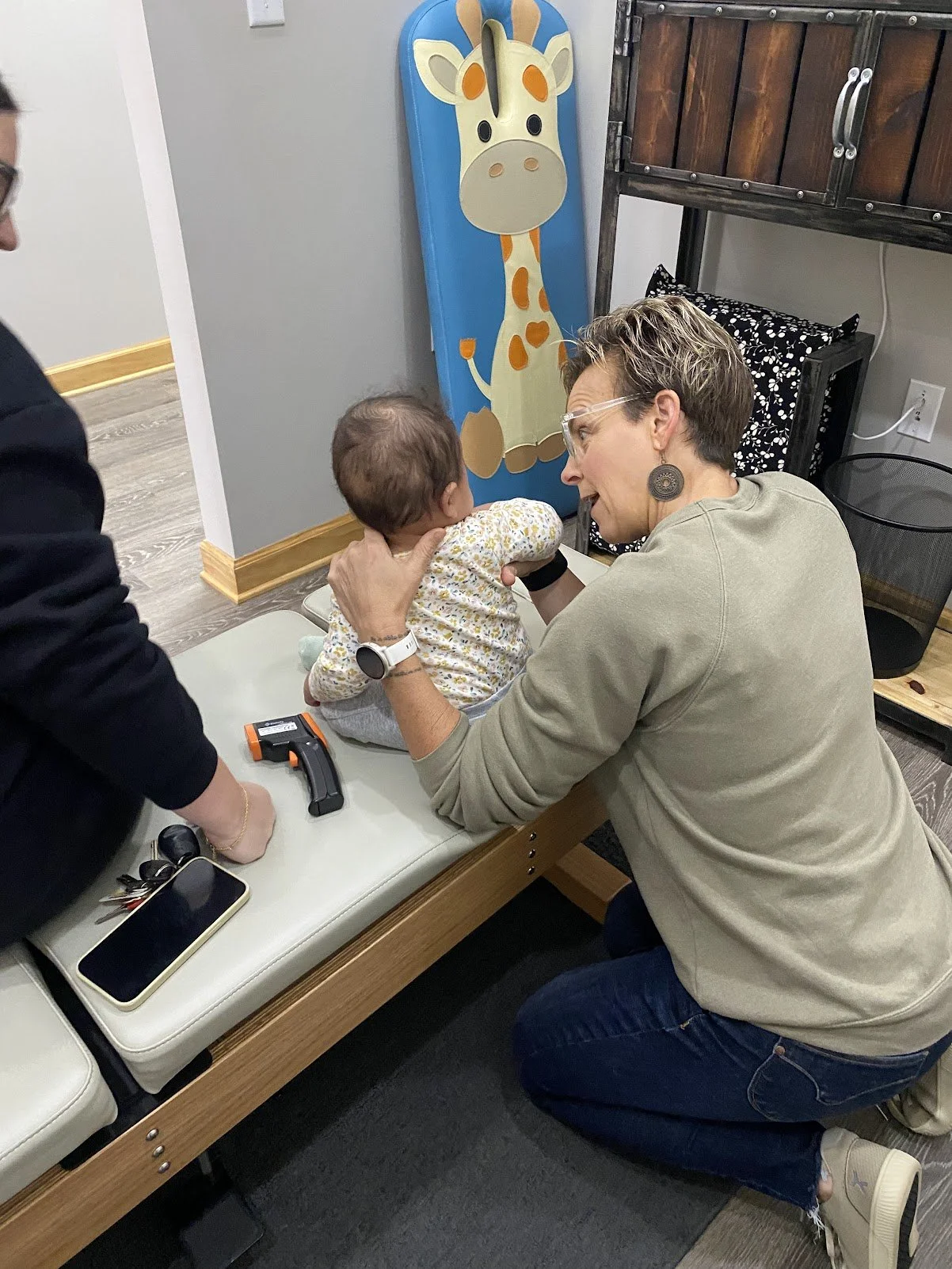
Neurologically-Focused Chiropractic Care for an infant looks very different from what many parents imagine when they hear the word chiropractic.
There is no need for aggressive twisting or forceful movements. Care is gentle, specific, and adapted to the age and neurological findings of the child.
At E320 Chiropractic, care is individualized based on the child’s history and Neurological INSiGHT Scan findings. Our focus is supporting healthier neurological organization, regulation, and adaptability rather than chasing individual symptoms.
Families may notice changes in areas such as sleep, settling, digestion, feeding, comfort, or overall regulation as their child progresses through care, but every child’s experience is different. We also continue evaluating neurological function rather than relying only on symptoms to tell us whether the nervous system is changing.
Your Child’s Birth Story Is Worth Understanding
A difficult birth does not determine your child’s future, and it does not mean every challenge they experience today started in the delivery room.
But the birth story still matters.
It is one of the earliest major experiences in your child’s neurological development, and when current challenges exist alongside a history of significant prenatal, birth, or early childhood stress, it makes sense to look at the entire picture.
At E320 Chiropractic, our goal is not to give your child another label or make you second-guess decisions that were made during birth. We want to help you understand how their nervous system is functioning today.
If feeding, sleep, digestion, sensory processing, development, or regulation have been difficult and you have always wondered whether your child’s birth story could be one piece of the puzzle, Neurological INSiGHT Scans can give us an objective place to start.
Sometimes understanding where the nervous system has been helps us better understand what it needs now.
