
POTS in Teens: Why Salt, Hydration, and Standing Slowly May Not Be the Whole Answer
POTS, or Postural Orthostatic Tachycardia Syndrome, is a form of dysautonomia that affects the autonomic nervous system, the part of the nervous system responsible for automatically regulating things like heart rate, blood pressure, digestion, temperature, and other functions your body handles without you having to think about them.
One of the hallmark signs of POTS is an abnormal increase in heart rate when moving from lying down to standing. But if your teen or young adult has POTS, you already know it can affect much more than their heart rate. Dizziness, lightheadedness, fainting, overwhelming fatigue, brain fog, headaches, nausea, digestive issues, temperature sensitivity, and exercise intolerance can make everyday life incredibly difficult.
For some families, the change feels dramatic. A teen who was going to school, playing sports, spending time with friends, and keeping up with a full schedule may suddenly struggle just to stand in the shower or walk across the room without feeling dizzy or exhausted. School becomes harder, activities get put on hold, and plans begin revolving around whether their body will cooperate that day.
Once POTS is diagnosed, families are often given strategies such as increasing fluids and salt, adding electrolytes, wearing compression garments, exercising gradually, and changing positions slowly. Those recommendations can be important tools for managing POTS symptoms and should be discussed with your child's medical team.
But they can also leave parents asking a bigger question: Why is my child's body struggling to regulate something as basic as standing up in the first place?
At E320 Chiropractic, that's where we start looking more closely at the nervous system itself.
POTS and Dysautonomia: Understanding the Connection
POTS isn't simply a heart-rate problem. It's a form of dysautonomia, meaning the autonomic nervous system is having difficulty regulating functions that should happen automatically.
Normally, when you stand up, your nervous system recognizes the change and quickly coordinates adjustments in heart rate, blood vessel tone, and circulation to help maintain blood flow. With POTS, that automatic response isn't working as efficiently, so the body has to compensate.
That distinction is important because it helps explain why someone with POTS can experience symptoms throughout so many different systems. The autonomic nervous system influences far more than heart rate, which is why dizziness and tachycardia can exist alongside brain fog, digestive problems, fatigue, temperature sensitivity, headaches, and sleep challenges.
For us, that raises an important question: How well is the nervous system regulating and adapting overall?
Why the Vagus Nerve Matters
One important part of autonomic regulation is the vagus nerve.
The vagus nerve is a major component of the parasympathetic nervous system, the part of the autonomic nervous system involved in rest, recovery, digestion, and regulation. It also plays an important role in communication between the brain and many of the body's internal systems.
A healthy nervous system needs flexibility. It should be able to increase its stress response when necessary and then shift back toward recovery once that stress has passed. With dysautonomia, that adaptability can become disrupted. The sympathetic, or fight-or-flight, side of the nervous system may remain highly active while parasympathetic regulation struggles to keep up.
For a teen with POTS, this can mean their nervous system is working incredibly hard just to accomplish things most of us never think about, like standing up, walking across a room, digesting a meal, adjusting to temperature changes, or recovering from a stressful day.
Why POTS Can Look So Different From One Person to Another
One of the frustrating things about POTS is that there isn't one universal story.
For some teens, symptoms appear following a viral illness. Others notice changes during puberty or another period of significant physiological stress. POTS can also occur alongside conditions such as Ehlers-Danlos Syndrome (EDS), Mast Cell Activation Syndrome (MCAS), migraine, autoimmune conditions, or other forms of dysautonomia.
For many families, the POTS diagnosis is only the latest chapter in a much longer health story.
When we sit down with families at E320 Chiropractic, we want to understand that entire story, not just the current symptom list. We look at pregnancy, birth, infancy, childhood health, illnesses, sleep, digestion, physical and emotional stress, and how well that child's nervous system has historically adapted to the demands placed on it.
We often refer to this accumulation of stress as the Perfect Storm. Rather than assuming one single event created the problem, we look at how multiple stressors may have affected the nervous system's ability to regulate and adapt over time.
Why Salt, Hydration, and Other POTS Strategies Still Matter
Increasing salt and fluids, using electrolytes, wearing compression garments, prioritizing sleep, and gradually building appropriate movement can all be valuable parts of POTS management. Medications may also be appropriate for some people, and a child's physician or specialist should help determine which strategies make sense for their individual needs.
At E320 Chiropractic, we're not asking families to choose between those approaches and nervous system care. We're interested in adding another layer to the conversation.
Those strategies can help support blood volume, circulation, and symptom management, but they don't necessarily tell us how well the autonomic nervous system itself is regulating. That's the piece we want to better understand.
How We Evaluate Nervous System Function at E320 Chiropractic
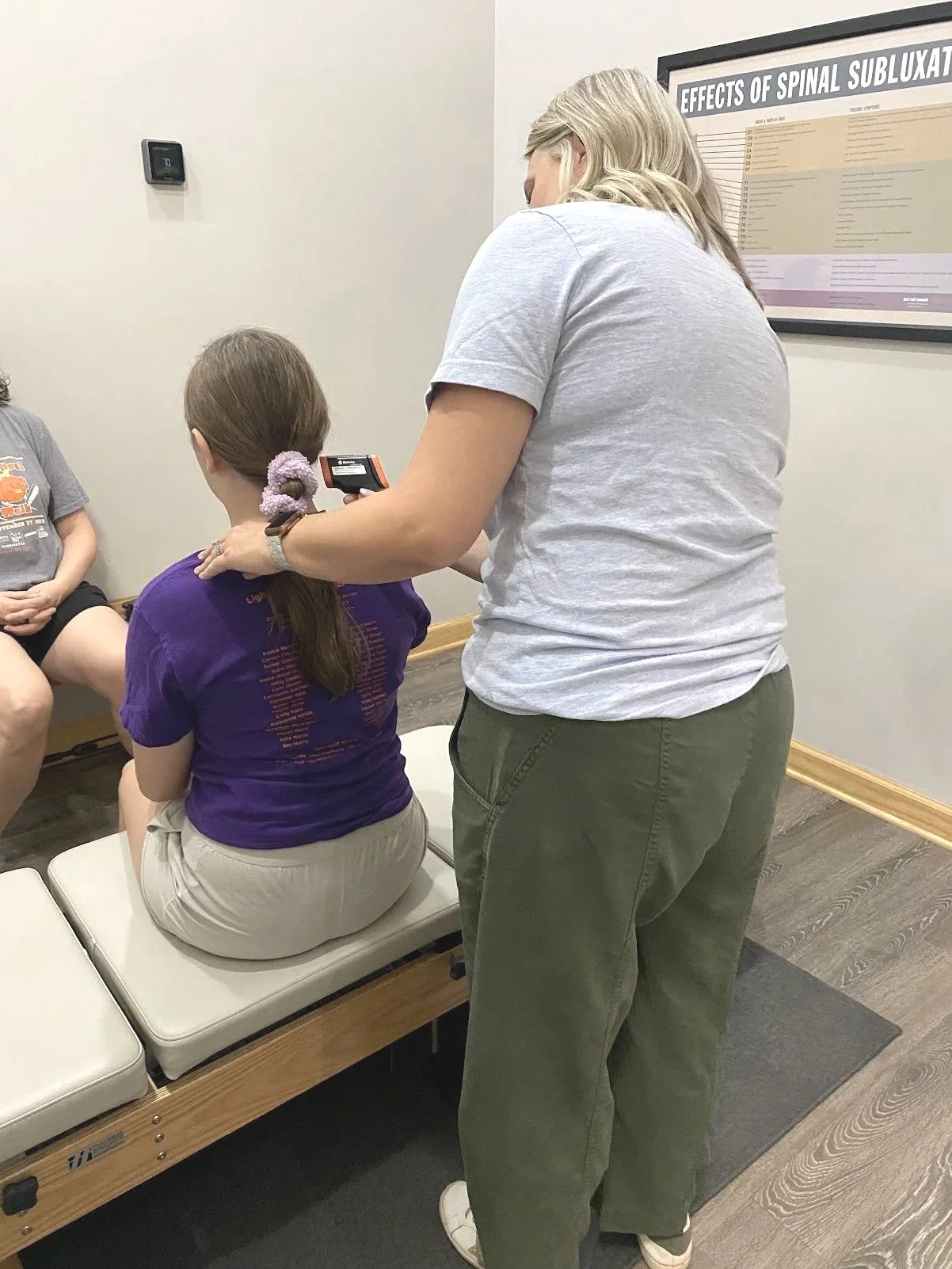
We use Neurological INSiGHT Scans to objectively evaluate patterns of nervous system function, regulation, and adaptability.
The Heart Rate Variability (HRV) Scan is especially valuable when we're looking at autonomic function. HRV gives us insight into the relationship between sympathetic activation and parasympathetic recovery, along with the nervous system's overall ability to adapt to stress.
The NeuroSpinal EMG helps us evaluate neurological tension, energy expenditure, and organization. For someone whose nervous system has been compensating for a long time, this can help us better understand how much energy the system is using simply to function.
The NeuroThermal Scan gives us additional information about autonomic nervous system patterns and how consistently the system is regulating.
Together, these three scans give us an objective picture of nervous system function that symptoms alone can't provide. They don't diagnose POTS, and they don't replace cardiology, neurology, or other appropriate medical testing. Instead, they help us understand another important part of the picture: how the nervous system itself is functioning in someone experiencing dysautonomia.
Supporting the Nervous System Alongside POTS Care
Neurologically-Focused Chiropractic Care isn't intended to diagnose, treat, or cure POTS. Our focus at E320 Chiropractic is supporting the nervous system's ability to regulate, adapt, and recover from stress.
Care is based on each person's neurological history and INSiGHT Scan findings rather than using the same approach for everyone with the same diagnosis. Through gentle, specific adjustments, we work to support healthier autonomic regulation and help the nervous system become more adaptable over time.
We also continue measuring neurological function throughout care. Instead of relying only on whether someone happens to feel better or worse on a particular day, follow-up INSiGHT Scans allow us to objectively see how those patterns are changing.
For families dealing with POTS, where symptoms can fluctuate dramatically from one day to the next, having another way to measure neurological progress can be incredibly valuable.
Looking Beyond POTS Symptoms
POTS can affect far more than a heart rate reading.
It can change school attendance, sports, friendships, independence, sleep, mental health, and a teen's confidence in their own body. Even simple things like taking a shower, standing in line, or spending the day with friends can require an enormous amount of energy.
That's why these kids deserve a team willing to look at the whole picture.
If your teen or young adult is living with POTS or symptoms of dysautonomia, appropriate medical evaluation and management remain important. But if you've been wondering whether there's another piece of their health story worth exploring, nervous system function is an important place to look.
At E320 Chiropractic, we use Neurological INSiGHT Scans and Neurologically-Focused Chiropractic Care to better understand and support nervous system regulation, adaptability, and resilience.
Salt, hydration, electrolytes, and other POTS strategies can be valuable tools. But your child's story is bigger than a list of symptom-management strategies. They deserve to understand the nervous system behind those symptoms, too.
