
What Is Subluxation? And Why It May Be the Missing Piece in Your Child’s Health
What Is Subluxation? And Why It May Be the Missing Piece in Your Child’s Health
If you’ve taken your child from specialist to specialist, run every test, tried the supplements, changed the diet, committed to therapies, and still find yourself wondering why nothing is fully working, this is for you.
There may be a missing piece that has not been clearly explained yet, and it starts with a word we use often at E320 Chiropractic: subluxation. Once you understand what subluxation really means, your child’s symptoms may start to make more sense.
You’re Not Imagining It
So many parents know in their gut that something deeper is going on. Their child may be struggling with sleep, digestion, sensory challenges, anxiety, focus, frequent illness, emotional regulation, or developmental delays, yet they are repeatedly told to “wait and see,” that it is “just genetics,” or that they may eventually grow out of it.
But many kids do not simply grow out of these patterns. Often, the symptoms shift as they grow. Colic may become chronic ear infections, ear infections may become sensory challenges, and sensory challenges may show up later as focus, anxiety, or emotional regulation struggles. The diagnosis may change, but the underlying nervous system stress pattern can remain. That is why we have to look deeper than the label.
So What Is Subluxation?
Subluxation is often explained as a bone being “out of place,” but that is only a very small piece of the picture. At its core, subluxation is a neurological issue involving altered alignment, fixation or restricted motion, and interference in communication between the brain and body.
When an area of the neurospinal system is not moving or functioning properly, the brain does not receive clear, accurate input from the body. Instead of getting a steady stream of organized information, it receives more stress-based input. That matters because the nervous system coordinates everything else: sleep, digestion, immune function, behavior, focus, sensory processing, emotional regulation, and development. When the signal is distorted, the body has a harder time regulating.
Proprioception and Nociception: The Piece Most Parents Are Never Taught
One of the most important parts of this conversation is the relationship between proprioception and nociception.
Proprioception is your body’s sense of where it is in space. It comes from your joints, muscles, ligaments, and connective tissues, constantly sending information to the brain about movement, posture, balance, coordination, and safety. In a well-regulated nervous system, proprioception provides calm, organized input that helps the brain understand, “I know where the body is, and everything is okay.”
When joints move well, proprioception increases. The brain receives better information, movement becomes more coordinated, and the nervous system has an easier time staying regulated.
But when an area of the spine becomes restricted or subluxated, proprioceptive input decreases. The brain gets less of the good, organizing information it needs. At the same time, nociception increases.
Nociception is the body’s threat signal. It is the input that tells the brain something is irritated, stressed, inflamed, or not functioning the way it should. You can think of proprioception and nociception like a seesaw. When healthy movement and proprioception go down, stress signaling and nociception often go up.
That means the brain may begin receiving a constant message that says, “Something is wrong here,” even when there is no obvious injury or pain. Over time, that can leave a child’s nervous system running in a more protective, high-alert state.
This is why subluxation can affect so much more than posture or pain. It can influence how safe, calm, coordinated, and regulated the body feels.
Why the Upper Neck Matters
The upper neck and brainstem area are especially important because they play such a major role in regulation. This region helps coordinate breathing, heart rate, digestion, immune responses, sensory processing, muscle tone, and emotional regulation. It is also closely connected to the vagus nerve, which helps the body shift into rest, digest, and regulate mode.
When there is tension, fixation, or neurological interference in this area, the nervous system may have a harder time turning off the stress response. The body can get stuck with the gas pedal on and the brake pedal not working well.
For one child, that may look like sleep struggles. For another, it may look like constipation, sensory overload, anxiety, meltdowns, low tone, toe-walking, W-sitting, focus issues, or frequent illness. Different symptoms, same foundational system.
How Subluxation Can Develop
Parents often ask how their child ended up with nervous system stress in the first place. The answer is usually not one single moment. It is often a layering of stressors over time, what we call The Perfect Storm.
For some children, the pattern begins during pregnancy, when prolonged stress can influence how the baby’s nervous system develops. This is not about blame. It is about understanding how sensitive early development can be. Birth can also play a role. Long labors, inductions, forceps, vacuum assistance, C-sections, or even difficult positioning can place stress on a newborn’s head, neck, and upper cervical spine.
Then, as a child grows, additional stressors may layer on: illness, antibiotics, environmental stress, falls, injuries, gut disruption, sensory overload, or chronic inflammation. Over time, the nervous system can become overwhelmed and less adaptable. When that happens, symptoms begin to show up.
What This Can Look Like in Real Life
Once you understand the nervous system connection, the pattern becomes easier to recognize. A child with subluxation and nervous system dysregulation may struggle physically with reflux, constipation, poor sleep, frequent illness, low or high muscle tone, clumsiness, toe-walking, or W-sitting.
They may also show sensory signs, like seeking intense input, avoiding certain textures or sounds, melting down in busy environments, or struggling to filter the world around them. For other kids, it may show up more in brain-based patterns like speech delays, anxiety, focus challenges, emotional outbursts, stimming, tics, or difficulty transitioning.
These are not character flaws. They are signals that the nervous system may be overwhelmed and asking for support.
Why This Often Gets Missed
Subluxation and nervous system dysregulation are often missed because most healthcare models are not designed to measure nervous system function in this way. Conventional pediatrics is excellent at identifying disease, infection, and major pathology, but it often does not assess how well the nervous system is regulating.
Functional medicine can be incredibly helpful with gut health, nutrition, and inflammation, but the nervous system is still the control system coordinating those processes. Therapy can be valuable too, but when the nervous system is stuck in stress mode, progress can feel slower or less consistent.
This is why so many families feel like they are doing everything right and still not seeing the progress they hoped for. They are not failing. They may simply be missing the foundation.
How We Find It
At E320 Chiropractic, we do not guess. We use INSiGHT Scans to help us understand how your child’s nervous system is functioning. These scans allow us to look at stress patterns, tension, adaptability, and autonomic nervous system function.
They give us objective information about how well the brain and body are communicating, where the system may be overloaded, and how much reserve your child has for healing and regulation. From there, we create a care plan based on what your child’s nervous system actually needs.
What Neurologically-Focused Care Is Designed to Do
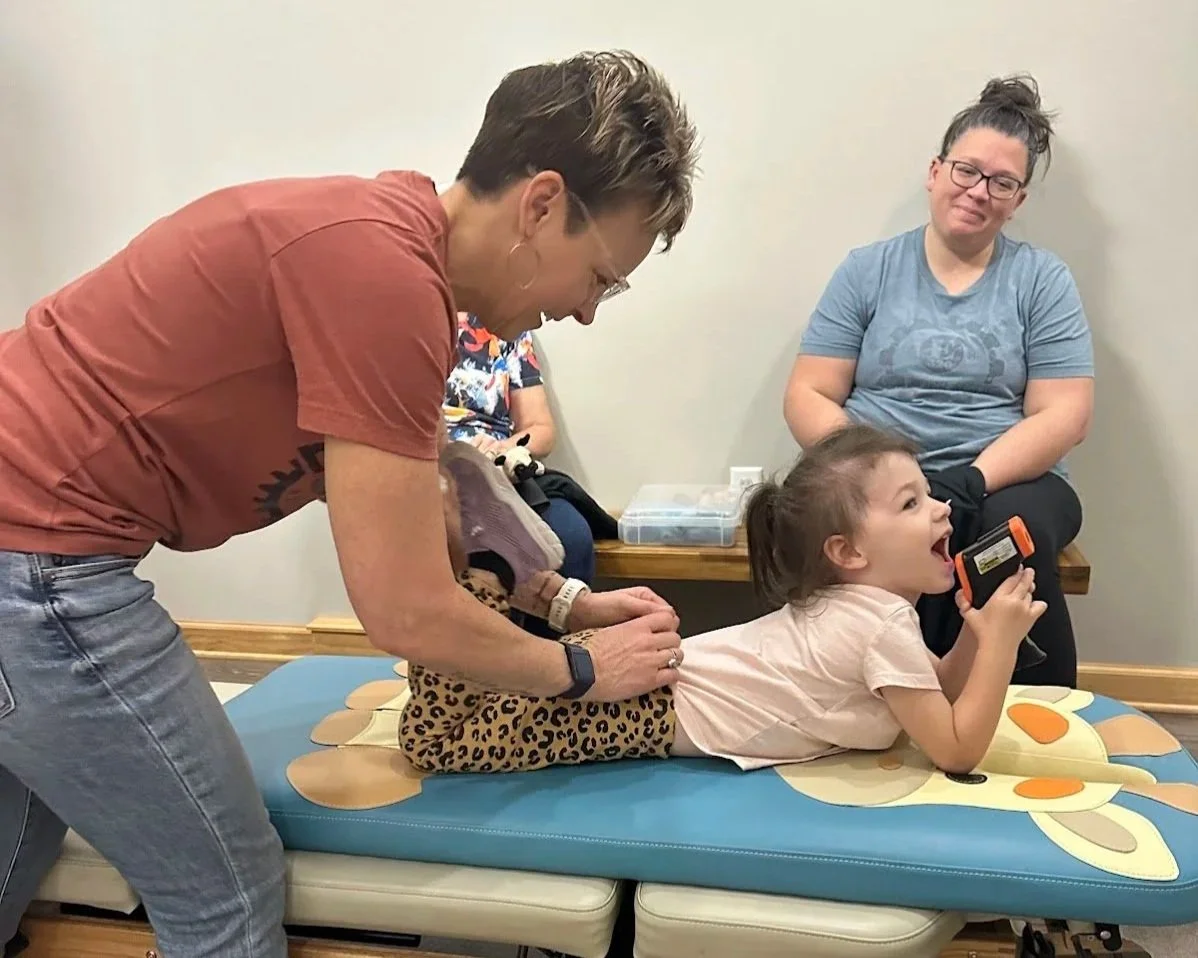
Neurologically-focused chiropractic care uses gentle, specific adjustments to reduce interference and support clearer communication between the brain and body. This is not about forcing the body to change. It is about helping the nervous system shift out of chronic stress and back toward regulation.
As motion improves and neurological interference decreases, proprioceptive input can increase and nociceptive stress signaling can calm down. In simpler terms, the brain begins receiving clearer, safer, more organized information from the body.
As the nervous system becomes more regulated, families may begin to notice changes in sleep, digestion, immune resilience, sensory tolerance, emotional regulation, focus, and overall adaptability. The goal is to build the foundation first so everything else has a better chance to work.
The Big Takeaway
Your child’s chronic challenges are not random. They are not always “just genetics,” and they are not necessarily something your child will simply grow out of. There may be a nervous system explanation.
If this resonates with your family, the next step is getting a clearer picture of what is happening beneath the surface. At E320 Chiropractic, we would love to help you understand your child’s nervous system and create a plan that supports healing from the foundation up.
Your child is not broken. Their nervous system may simply need support. And when the foundation changes, the whole story can begin to change too.