
Why Missed Baby Milestones Are Nervous System Red Flags
Why Missed Baby Milestones Are Nervous System Red Flags
Your baby’s first year is one of the most important windows for neurological development they will ever have. Their brain is growing rapidly, building new pathways, and learning how to coordinate the basics of life: feeding, sleeping, moving, digesting, regulating, and connecting.
And yet, most parents are only told to watch for milestone checkboxes. First smile. First roll. Sitting up. Crawling. First steps.
Those milestones matter, of course. But they do not tell the whole story.
At E320 Chiropractic, we want parents to understand that your baby’s first year is not just about when milestones happen. It is also about how they happen. A baby may technically “hit” a milestone while still compensating through tension, asymmetry, or nervous system stress underneath the surface.
A Baby Can Pass a Screening and Still Need Support
This is something many parents are never told: a baby can pass a standard developmental screening and still have signs that their nervous system is struggling.
Traditional milestone checks often ask whether your baby can roll, sit, crawl, or walk within a certain window. But they do not always evaluate the quality of that movement. Is your baby turning both directions? Are they using both sides of the body evenly? Are they feeding well, sleeping well, and settling between moments of stress?
Those details matter because they tell us how the nervous system is functioning.
If you have ever thought, “Something feels off, but everyone keeps telling me not to worry,” I want you to know that your instincts matter. Parents often notice subtle patterns long before they become obvious on a screening form.
The Nervous System Is the Foundation
Everything your baby does is coordinated by the nervous system. Feeding, latching, swallowing, sleeping, pooping, turning their head, using both sides of the body, tolerating tummy time, and calming after being upset all depend on clear communication between the brain and body.
During the first year, the brain has an incredible ability to adapt and form new pathways. This is called neuroplasticity. It is one of the reasons early support can be so powerful.
But that same rapid development also means the nervous system is especially sensitive to stress. When the system is under strain, whether from prenatal stress, birth stress, tension in the upper neck, or early feeding and digestive challenges, development can still move forward, but it may do so through compensation.
That is why we look beyond the checklist.
What Subluxation and Dysautonomia Mean for Babies
Two important concepts we look for in infants are subluxation and dysautonomia.
Subluxation refers to neurological interference in the neurospinal system. In babies, this can develop from stress during pregnancy, birth interventions, positioning in utero, or strain during labor and delivery. It can affect how clearly the brain and body communicate, even when your baby looks “fine” on the outside.
Dysautonomia refers to imbalance in the autonomic nervous system, the part of the body that controls automatic functions like sleep, digestion, heart rate, immune response, and regulation. We often explain this as the balance between the gas pedal, or fight-or-flight mode, and the brake pedal, or rest-and-digest mode.
When a baby is stuck with too much gas pedal and not enough brake, everything can feel harder. Feeding may be harder. Sleep may be lighter. Digestion may be uncomfortable. Their little body may struggle to fully relax.
Every Milestone Tells a Nervous System Story
Milestones are more than cute moments to document. They are windows into how your baby’s brain and body are communicating.
Feeding is one of the first neurological milestones. Latching, sucking, swallowing, and coordinating breathing require multiple cranial nerves, muscle coordination, and a calm enough nervous system to organize it all. When feeding is difficult, it can be one of the earliest signs that the nervous system needs support.
Head control gives us insight into how the upper cervical spine, deep neck muscles, and brain-body communication are developing. Rolling shows whether both sides of the body are working together. Crawling is especially important because it supports coordination between both sides of the brain and lays the groundwork for later skills like walking, balance, reading, and focus.
This is why sequence matters so much.
It is not just about how quickly your baby reaches a milestone. It is about whether they move through the developmental sequence with good coordination, symmetry, and regulation.
The Perfect Storm That Can Disrupt Development
Some babies seem to struggle more than others, and there is often a reason for that. At E320 Chiropractic, we talk about The Perfect Storm: a layering of stressors that can affect the developing nervous system before parents even realize what is happening.
This can begin during pregnancy, especially when chronic stress or anxiety influences the baby’s developing stress response. It can continue during birth, when interventions like induction, forceps, vacuum assistance, C-section, or prolonged labor place stress on the baby’s head, neck, and nervous system.
After birth, more layers can add up: feeding struggles, reflux, constipation, poor sleep, overstimulation, antibiotic exposure, and frequent illness.
None of this is about blame. It is about understanding the full picture so we can better support your baby’s nervous system while development is happening so quickly.
Why “Wait and See” Can Miss the Window
The problem with “wait and see” is that it often waits until compensation becomes more obvious.
A baby may be able to roll, sit, or walk, but if they are doing it with tension, asymmetry, skipped steps, or a stressed nervous system, that pattern can carry forward into later development. Over time, what starts as feeding struggles, colic, reflux, poor sleep, or difficulty settling may show up as sensory challenges, coordination issues, speech delays, emotional dysregulation, or focus struggles.
The first year is a powerful window because neuroplasticity is high. Gentle, targeted support during this stage can help the nervous system organize more efficiently while the foundation is still being built.
That does not mean parents should panic over every milestone. It means your observations deserve to be taken seriously.
How We Support Babies at E320 Chiropractic
Our approach is simple: instead of waiting for bigger problems to develop, we support nervous system function from the beginning.
At E320 Chiropractic, we use gentle, neurologically-focused assessments and INSiGHT Scans when appropriate to better understand how your baby’s nervous system is adapting. These scans are non-invasive and help us look beneath the surface at patterns of stress, regulation, and function.
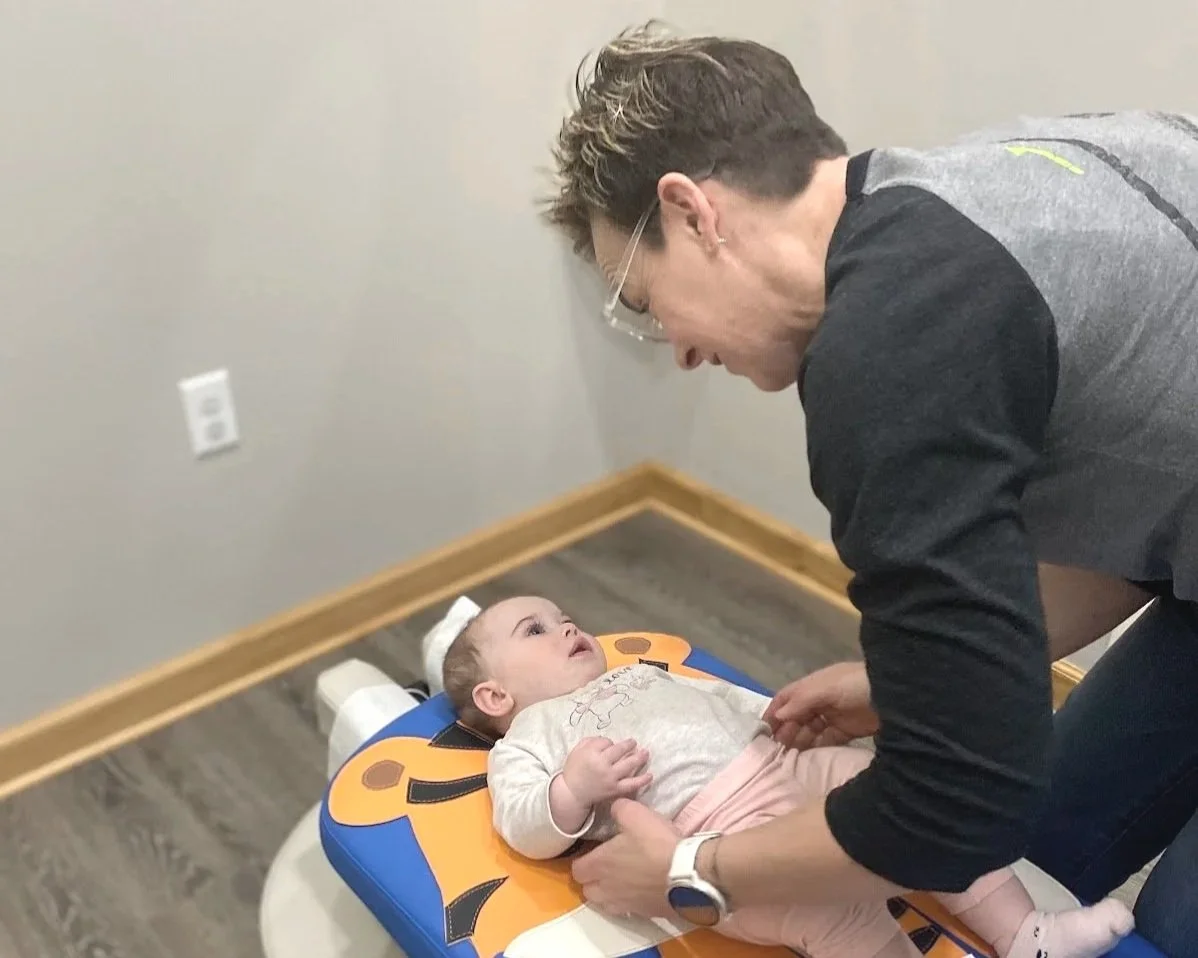
Infant adjustments are incredibly gentle. The pressure is often compared to checking the ripeness of a tomato. The goal is not to force change, but to reduce interference, support better brain-body communication, and help the nervous system shift toward regulation.
As babies become more regulated, families often notice changes in feeding, sleep, digestion, comfort, movement, and overall ease.
The Foundation Is Being Built Right Now
Your baby’s first year is not just about learning to eat, sleep, roll, crawl, and walk. It is about building the neurological foundation that supports the rest of their life.
If something feels off with your baby’s feeding, sleep, digestion, movement, or ability to settle, you do not have to ignore that instinct. You also do not have to wait until the concern becomes bigger.
At E320 Chiropractic, we would love to help you understand what your baby’s nervous system may be telling you and support their development from the foundation up.
Because your baby is not just hitting milestones.
They are building the system that will help them thrive.