
Why Your Child’s Gut Won’t Heal: The Missing Nervous System Connection
You’ve cleaned up the diet. You’ve added the probiotics. You’ve run the food sensitivity tests, researched gut health for hours, and spent more money on supplements than you ever imagined you would.
And yet your child is still struggling.
Maybe it’s constipation, reflux, bloating, eczema, food sensitivities, poor sleep, anxiety, behavioral meltdowns, or chronic inflammation. Maybe you’ve seen some improvement, but not the breakthrough you were hoping for.
If that sounds familiar, I want you to know something important: you haven’t failed. In fact, many of the families we see at E320 Chiropractic are doing all the right things. They’re just missing a piece of the puzzle that almost nobody talks about.
When it comes to your child’s gut, the nervous system is in charge.
The Gut and Brain Are More Connected Than Most Parents Realize
Most parents have heard about the gut-brain connection by now. They know that gut health can influence mood, behavior, immunity, and even focus.
What many parents do not realize is that the communication is not just happening from the gut to the brain. The brain is constantly sending instructions down to the gut as well.
The nervous system tells the digestive system when to move food, when to release enzymes, when to absorb nutrients, and when to calm inflammation. Without those signals, digestion becomes much harder, even when a child is eating healthy foods and taking high-quality supplements.
That is why some children can be on the perfect diet and still struggle with digestive issues, food sensitivities, or nutrient deficiencies. The problem may not be the food itself. The problem may be the communication between the brain and the gut.
Why the Vagus Nerve Matters So Much
One of the most important players in this conversation is the vagus nerve.
The vagus nerve is the longest nerve in the parasympathetic nervous system and acts like a communication highway between the brain and many of the body’s most important organs, especially the digestive tract.
Every day, the vagus nerve helps regulate digestion, nutrient absorption, immune responses, inflammation, heart rate, and emotional regulation. It plays a major role in helping the body shift into what we call "rest, digest, and heal" mode.
When vagus nerve function is strong, digestion tends to work more efficiently. When vagal tone is reduced and the nervous system is stuck in fight-or-flight mode, digestion often begins to struggle.
This is one reason we frequently see digestive issues show up alongside sleep challenges, sensory concerns, emotional regulation struggles, anxiety, and immune dysfunction. These systems are all connected through the nervous system.
Four Important Jobs of the Vagus Nerve
The vagus nerve helps coordinate several key digestive functions that many parents never realize are neurologically controlled.
First, it helps regulate motility, which is the movement of food through the digestive tract. When motility slows down, constipation, reflux, bloating, and digestive discomfort often follow.
Second, it helps regulate absorption. Nutrients can only support healing if they are properly absorbed and utilized by the body. A child may be eating nutritious foods but still struggle to benefit from them if nervous system regulation is poor.
Third, the vagus nerve helps coordinate assimilation. This means helping nutrients get where they need to go and supporting the body's ability to use those nutrients effectively.
Finally, the vagus nerve plays a major role in controlling inflammation. Healthy vagal function helps regulate immune responses and calm unnecessary inflammation throughout the body. When that system is not functioning well, food sensitivities, eczema, skin issues, and immune challenges can become more common.
How the Brain-Gut Connection Gets Disrupted
Parents often ask how a child’s nervous system becomes dysregulated in the first place.
The answer usually involves multiple layers of stress over time, something we often refer to as The Perfect Storm.
For some children, the story begins during pregnancy. Chronic maternal stress can influence the developing nervous system before birth. For others, birth itself may introduce significant stress through interventions such as induction, forceps, vacuum extraction, prolonged labor, C-section delivery, or difficult positioning.
These stressors can place strain on the upper cervical spine and brainstem region, where important neurological pathways—including the vagus nerve—originate.
After birth, additional layers may accumulate. Reflux, colic, frequent illness, repeated antibiotic use, chronic inflammation, environmental toxins, poor sleep, and sensory stress can all place added demands on the nervous system.
Over time, the body can become stuck in a state of chronic fight-or-flight, making it difficult for digestion, immunity, and healing to function the way they were designed to.
Why Supplements and Diet Changes Sometimes Plateau
This is the part that can be frustrating for parents.
Nutrition absolutely matters. Probiotics can help. Functional medicine approaches can be incredibly valuable. Gut-healing protocols often play an important role in a child’s healing journey.
But if the nervous system is not regulating properly, those interventions may never reach their full potential.
A simple way to think about it is this: healthy food and supplements provide the raw materials for healing, but the nervous system is what tells the body how to use those materials.
When the nervous system is overwhelmed, the body may struggle to absorb, assimilate, and respond to all of the healthy changes you are making.
That is why so many families feel stuck. It is not because the nutrition plan failed. It is because the communication system that directs the plan may still need support.
What Healing Often Looks Like
One of the things we love seeing in practice is what happens when nervous system regulation begins to improve.
Often, digestion is one of the first systems to respond. Parents may notice more regular bowel movements, less reflux, improved food tolerance, and better sleep. As regulation continues to improve, many families report calmer behavior, improved emotional regulation, stronger immune function, and fewer inflammatory flare-ups.
This is not because the nervous system is the only thing that matters. It is because the nervous system is the system coordinating everything else.
When communication improves, the body often becomes much better at using all of the other tools and supports already in place.
Why We Start With the Nervous System
At E320 Chiropractic, we believe the foundation matters.
Using INSiGHT Scans, we evaluate how a child’s nervous system is adapting to stress, where patterns of dysregulation may exist, and how well the body is regulating overall. These scans give us objective information that helps us understand what is happening beneath the surface.
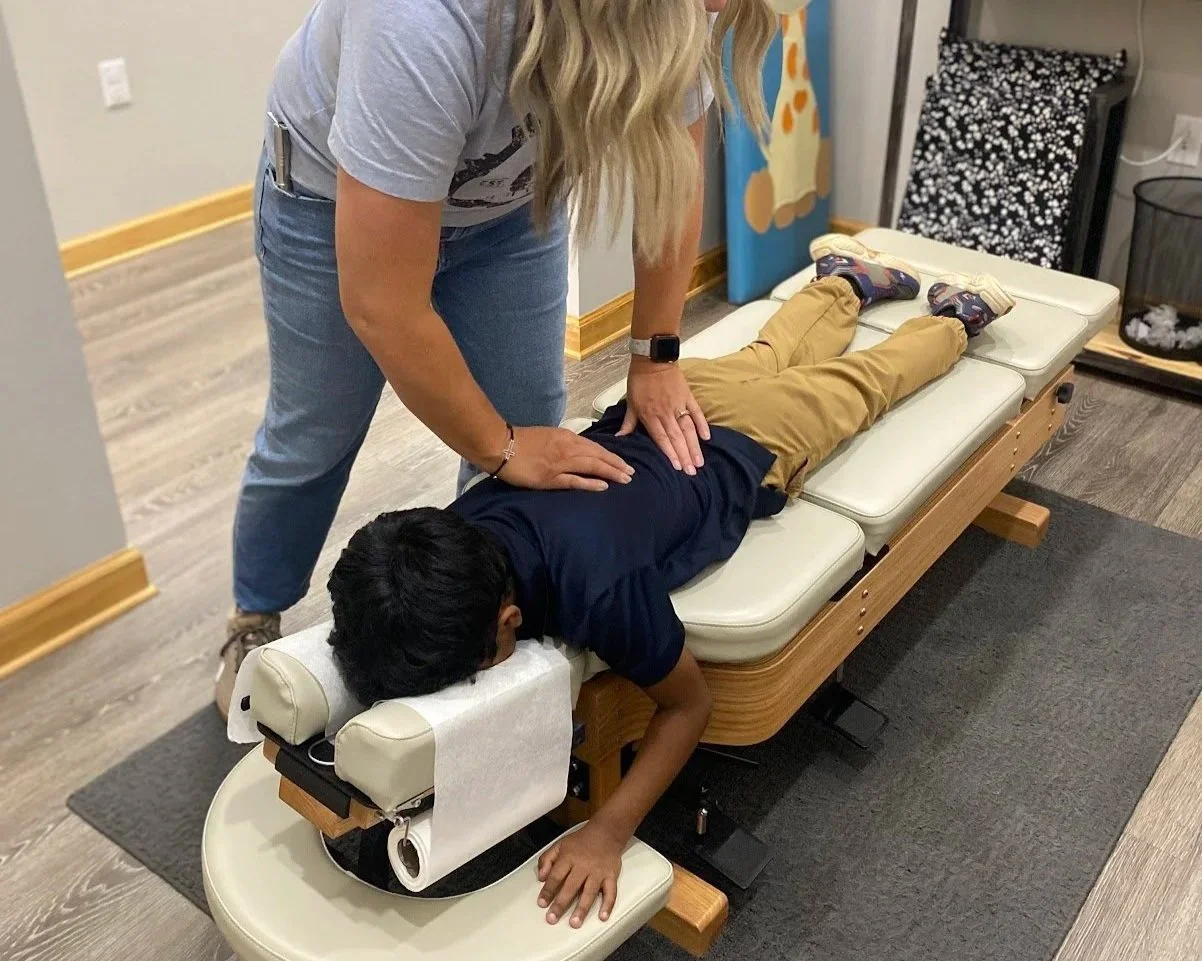
From there, neurologically-focused chiropractic care is designed to reduce interference, improve nervous system communication, and support better regulation throughout the body.
Our goal is not simply to help children manage symptoms. Our goal is to support the nervous system so the body can function the way it was designed to.
There Is Hope
If you have been working tirelessly to improve your child’s gut health and still feel like something is missing, trust that instinct.
You have not wasted your time. You have not failed. The work you have been doing matters.
But if your child’s nervous system is stuck in stress mode, it may be difficult for the body to fully benefit from everything you have already put into place.
At E320 Chiropractic, we help families understand the connection between the brain, the gut, and the nervous system so they can stop guessing and start building a stronger foundation for healing.
Because your child’s gut does not work in isolation.
And when the nervous system begins to regulate, everything downstream has a better chance to heal.