
Discovering the Root Cause of Chronic Health Challenges in Kids
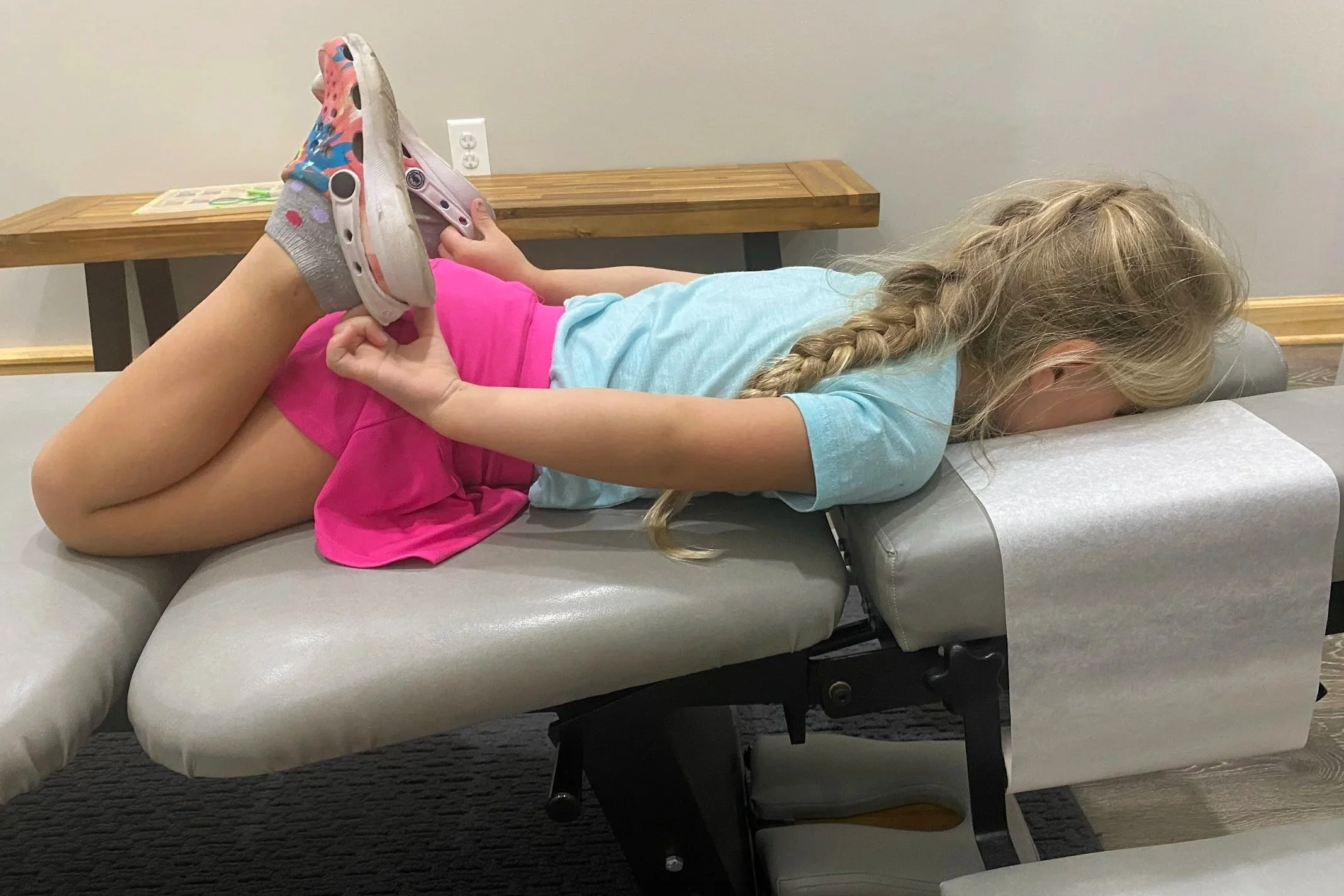
As a parent, you’ve likely been told that more is better.More therapy sessions. More specialists. More appointments. More strategies.You might be juggling speech therapy, occupational therapy, feeding therapy, behavioral therapy, and then layering in supplements, dietary changes, sensory tools, and home programs on top of it all.And yet, despite all the effort, progress feels slow. Sometimes it stalls entirely.You start asking yourself questions no one seems able to answer. What are we missing? Why isn’t this working the way it’s supposed to?If you feel exhausted, overwhelmed, and like you’re pushing uphill nonstop, you’re not alone.
Why “More” Isn’t Always the Answer
What many parents are never told is this:Your child may not need more therapies. They may need the right foundation first.Every week, families come into E320 Chiropractic already doing everything they can. Multiple appointments per week. Carefully coordinated schedules. Endless energy poured into helping their child succeed.But when we ask whether anyone has ever evaluated how their child’s nervous system is functioning, the answer is almost always no.This matters because the nervous system is the control center for development. It influences how your child processes information, regulates emotions, coordinates movement, digests food, sleeps, and adapts to stress.Without a regulated nervous system, even the best therapies have to work against resistance.
You Can’t Build on an Unstable Foundation
Imagine trying to remodel a house with cracks running through the foundation.You could repaint the walls, replace the floors, and bring in the best designers. But without stabilizing the base, things would keep shifting. Doors wouldn’t close properly. Walls would crack again. Progress would feel temporary.This is what happens when therapies are layered on top of a stressed nervous system.Therapies aren’t wrong. They’re often incredibly helpful. But when the foundation is unstable, progress can be inconsistent, exhausting, or short-lived.The nervous system acts like an air-traffic controller, coordinating all incoming and outgoing signals in the body. When it’s overwhelmed or stuck in stress mode, communication between systems breaks down.And no one tells parents to check that first.
How the Foundation Becomes Stressed So Early
For many kids, nervous system stress begins earlier than most people realize.It often starts with a buildup of stressors over time rather than one single event.Prenatal stress is one layer. When a mother experiences prolonged physical, emotional, or chemical stress during pregnancy, that information is communicated to the developing baby’s nervous system.Then comes birth. Even smooth deliveries place stress on a newborn’s spine and nervous system. When interventions are necessary, that stress can increase, particularly in the upper neck where critical neurological pathways exist.After birth, additional layers often follow. Early illness. Antibiotics. Digestive challenges. Sleep disruption. Sensory overload. Environmental stressors. Rising developmental demands.Each layer adds pressure to the system. By the time delays or behavioral concerns become obvious, the nervous system may already be operating in survival mode rather than growth mode.
Why Adding More Can Make Things Harder
This is where parents often feel the most guilt, even though it doesn’t belong there.When a child’s nervous system is already overloaded, adding more input can overwhelm their capacity to process it.You may notice early gains followed by plateaus. Therapy sessions that become harder instead of easier. Increased meltdowns. Poor sleep. Behavioral regression.This doesn’t mean your child can’t do the work. It means their nervous system doesn’t yet have the capacity to integrate it.Many parents respond by trying harder, adding one more thing, or questioning themselves. But the issue was never a lack of effort. It was an unstable foundation.
What Changes When the Nervous System Is Supported
When care focuses on restoring nervous system regulation, families often notice a shift.At E320 Chiropractic, we use neurological scans to assess how a child’s nervous system is adapting to stress and where it may be stuck. These scans give us objective insight into patterns of tension, imbalance, and overload.With gentle, specific chiropractic adjustments, we work to reduce interference and support healthier communication between the brain and body.When that foundation stabilizes, parents often report that the therapies they were already doing begin to work more effectively.Speech becomes more organized and expressive. Sensory processing improves. Coordination and motor skills come together. Feeding becomes less stressful. Sleep improves. Behavior becomes more regulated.Nothing magical was added. The nervous system simply gained the capacity to support development.
Your Child Is Capable of More Than You’ve Been Shown
If you’re tired of chasing symptoms and stacking interventions without lasting change, it may be time to ask a different question.What if the foundation has been the missing piece all along?Neurologically-focused chiropractic care doesn’t replace therapies. It helps unlock them by supporting the system that allows learning, growth, and healing to happen.Your child doesn’t need you to do more. They need their nervous system to be supported.
Taking the Next Step Forward
You’ve already proven how deeply you care. You’ve shown up again and again, even when it’s been exhausting.Now it may be time to shift the focus from doing more to doing what matters most.When the nervous system moves out of chronic stress and into regulation, everything else you’re already doing has a chance to work the way it was intended to.If you’re ready to explore a foundational, neurologically-focused approach for your child, the team at E320 Chiropractic would love to help.Healing doesn’t begin with more effort. It begins with the right foundation.