
When Breathwork Isn’t Enough: Looking Deeper at Nervous System Regulation
Breathing exercises, sensory tools, magnesium, meditation, cold exposure, diet changes, therapy, supplements. If you have a child who struggles with anxiety, sensory overload, sleep, emotional regulation, digestive issues, or frequent meltdowns, there is a good chance you have tried at least a few of these.
And many of them can be incredibly valuable. The frustrating part is when something seems to help for a while, but the change never seems to hold. Your child settles more easily for a few weeks, then the meltdowns return. Sleep improves, then suddenly falls apart again. A new sensory strategy works beautifully until one stressful week seems to erase all the progress.
That does not necessarily mean you chose the wrong tool. Sometimes it means we need to look more closely at the nervous system the tool is asking to regulate. At E320 Chiropractic, we are big believers in nervous system regulation, but we also believe regulation is about more than teaching someone how to calm down. We want to understand how much capacity the nervous system actually has to adapt, recover, and shift out of a stress response in the first place.
Regulation Tools Are Valuable, But They Are Still Tools
Breathwork, meditation, yoga, sensory strategies, nutrition, therapy, and other regulation practices can all give the nervous system helpful input. For a nervous system with good adaptability, that input may be enough to help the body shift from sympathetic activation, or fight-or-flight, toward a more parasympathetic state of rest and recovery.
But what happens when the nervous system is already running close to its limit? A child whose system is chronically overwhelmed may be able to settle temporarily with deep breathing, swinging, pressure, movement, or another calming strategy, but then quickly return to the same heightened state.
That is one reason parents sometimes tell us, “It works, but it never seems to stick.” The tool may still be helping. The bigger question is whether the nervous system has enough capacity and adaptability to maintain that change.
Nervous System Regulation Is More Than Feeling Calm
We sometimes talk about regulation as though the goal is to make the nervous system calm all the time, but that is not really how a healthy nervous system works.
Your child needs access to their sympathetic nervous system. That is the part of the autonomic nervous system that helps them wake up, focus, run, play, compete, respond to danger, and meet the demands of everyday life. They also need access to the parasympathetic side, which supports rest, digestion, recovery, sleep, and restoration.
Health is not about staying on one side. It is about being able to move between the two. We call that adaptability.
A more regulated nervous system can appropriately hit the “gas pedal” when life requires it and then find the “brake” when the demand has passed. Dysregulation can occur when the system has difficulty making those transitions and repeatedly becomes stuck in patterns of high activation, shutdown, or poor recovery. That is the deeper neurological pattern we want to understand.
Why Some Kids Reset So Quickly Back Into Stress
Think about two children walking into the same loud birthday party. One notices the noise, runs off to play, eats cake, gets tired, and eventually goes home. The other walks in and immediately covers their ears. Their body becomes tense, they cling to a parent, a small disappointment turns into a meltdown, and it can take hours for their system to recover afterward.
The environment is the same, but the nervous systems may be processing that environment very differently.
This is why nervous system regulation is not simply a matter of teaching better coping skills. A child’s ability to use those skills is influenced by what state their nervous system is already in and how much capacity they have available to process what is happening around them.
When the brain perceives that the body needs protection, survival responses naturally take priority. Access to higher-level functions like flexible thinking, emotional control, communication, and problem-solving may become more difficult. That does not mean those skills are unimportant. It means sometimes we need to support the neurological foundation underneath them too.
The Perfect Storm and Nervous System Capacity
At E320 Chiropractic, we often use the term Perfect Storm to describe the accumulation of stressors that can influence a developing nervous system over time. There is rarely one single event we can point to and say, “This caused everything.” Instead, we look at the entire story.
That history might include significant stress during pregnancy, a challenging birth, early feeding or sleeping struggles, reflux or colic, frequent illnesses, repeated medications, injuries, sensory stress, emotional stress, school demands, or simply a child whose nervous system has been working incredibly hard from a very young age.
One stressor does not automatically create nervous system dysfunction. But when stress continues to accumulate faster than the nervous system can adapt and recover, the child’s capacity may become smaller and smaller.
Eventually, things that seem minor to everyone else can feel enormous to that child. A change in routine, a scratchy shirt, being hungry, homework, a sibling touching their toy, a loud room, or bedtime can become the final stressor that pushes an already-overloaded system past its limit.
Parents often see the behavior on the outside. We are interested in what the nervous system may be doing underneath it.
Why “Calming Down” Can Be Hard When the Nervous System Is on High Alert
Telling a dysregulated child to “take a deep breath” can sometimes be a little like telling someone in the middle of a sprint to simply slow their heart rate. Breathing can absolutely influence the autonomic nervous system, but the ability to intentionally use breathwork requires awareness, practice, and enough neurological capacity to access that strategy in the moment.
The same is true for many regulation tools. They may provide important input and support, but they are not necessarily designed to explain why the nervous system keeps returning to the same high-alert pattern.
That is where we become interested in neurological function itself. Rather than asking only, “What can we give this child to calm them down?” we also ask, “How well is their nervous system actually adapting and recovering from stress?”
Those are two very different questions, and both matter.
How We Measure Nervous System Function at E320 Chiropractic
One of the things that makes our approach different at E320 Chiropractic is that we do not want to guess at how the nervous system is functioning. We use Neurological INSiGHT Scans to give us objective information about patterns of regulation, neurological tension, and adaptability.
The NeuroThermal Scan helps us evaluate patterns associated with autonomic nervous system function. The NeuroSpinal EMG gives us information about neurological tension, energy expenditure, and organization, helping us better understand how hard the nervous system may be working. Heart Rate Variability, or HRV, gives us insight into autonomic adaptability, including the relationship between sympathetic activation and parasympathetic recovery.
Together, these scans help us see whether the nervous system appears flexible and adaptable or whether it may be using an unusually high amount of energy simply trying to manage everyday demands.
They do not diagnose anxiety, ADHD, sensory processing challenges, digestive disorders, or other medical conditions. They give us another layer of information about how the nervous system itself is functioning.
Supporting the Foundation Alongside the Tools You Already Use
Neurologically-Focused Chiropractic Care is not about throwing away everything your family is already doing. We are not anti-therapy, anti-supplement, anti-breathwork, anti-sensory tools, or anti-nutrition.
In many cases, we want those tools to work even better.
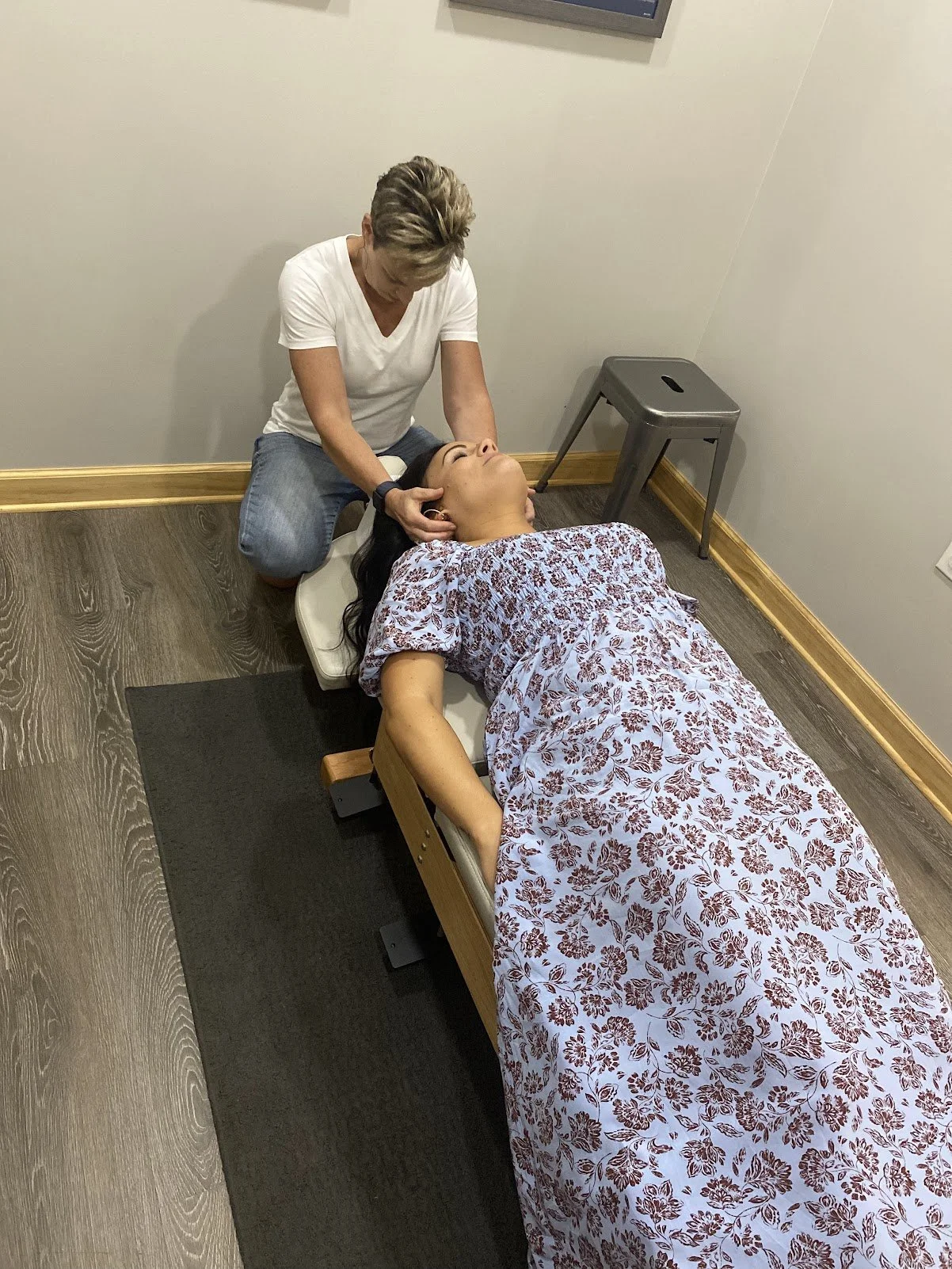
At E320 Chiropractic, care is individualized based on your child’s history and Neurological INSiGHT Scan findings. Through gentle, specific adjustments, our focus is supporting nervous system regulation, organization, and adaptability over time.
The goal is not to force a child into a permanently calm state. It is to support a nervous system with more capacity to respond appropriately to stress and recover afterward. As that foundation becomes more adaptable, families may notice that some of the regulation strategies they were already using become easier for their child to access and integrate.
When Everything Helps a Little but Nothing Seems to Hold
There are certain patterns that often make parents start asking deeper questions. Maybe therapies help, but progress repeatedly plateaus. Maybe a sensory tool works beautifully at home but seems completely inaccessible during a meltdown. Maybe sleep improves for a few weeks before returning to the same pattern. Or maybe your child can regulate when everything around them is going well, but the smallest disruption sends their system right back into high alert.
Those patterns do not automatically mean something is wrong with the therapies or strategies you are using, and they do not mean your child is failing to regulate. They may simply be telling us that their nervous system is carrying more stress than we can see from the outside.
That is information worth paying attention to.
Regulation Starts With Understanding the Nervous System
There is no single breathing exercise, supplement, adjustment, therapy, or health hack that replaces the need to understand the whole child. That is why our approach at E320 Chiropractic starts with listening to the entire story and objectively evaluating nervous system function.
If your family has tried strategy after strategy and keeps finding that improvements are temporary, it may be worth looking beyond the next regulation tool and asking a different question: How much capacity does this nervous system actually have to adapt and recover?
Neurological INSiGHT Scans can give us an objective place to begin answering that question and help us better understand why a child’s nervous system may be working so hard in the first place.
